Website Tracking
WordPress
GTM

When individuals consider digital marketing, they frequently associate it with advertisements and conversions. However, in truth, effective marketing goes beyond simply convincing someone to make an immediate purchase. It involves leading them on a path — from finding your brand to ultimately becoming a devoted customer.
This path is referred to as the marketing funnel.
In my experience with performance marketing and marketing analytics, I've observed that many companies concentrate solely on the conversion stage at the bottom of the funnel, neglecting to establish robust awareness or engagement phases. The outcome frequently leads to unsatisfactory ad results and elevated customer acquisition expenses.
Grasping the marketing funnel enables companies to develop a systematic approach rather than depending on haphazard marketing efforts.
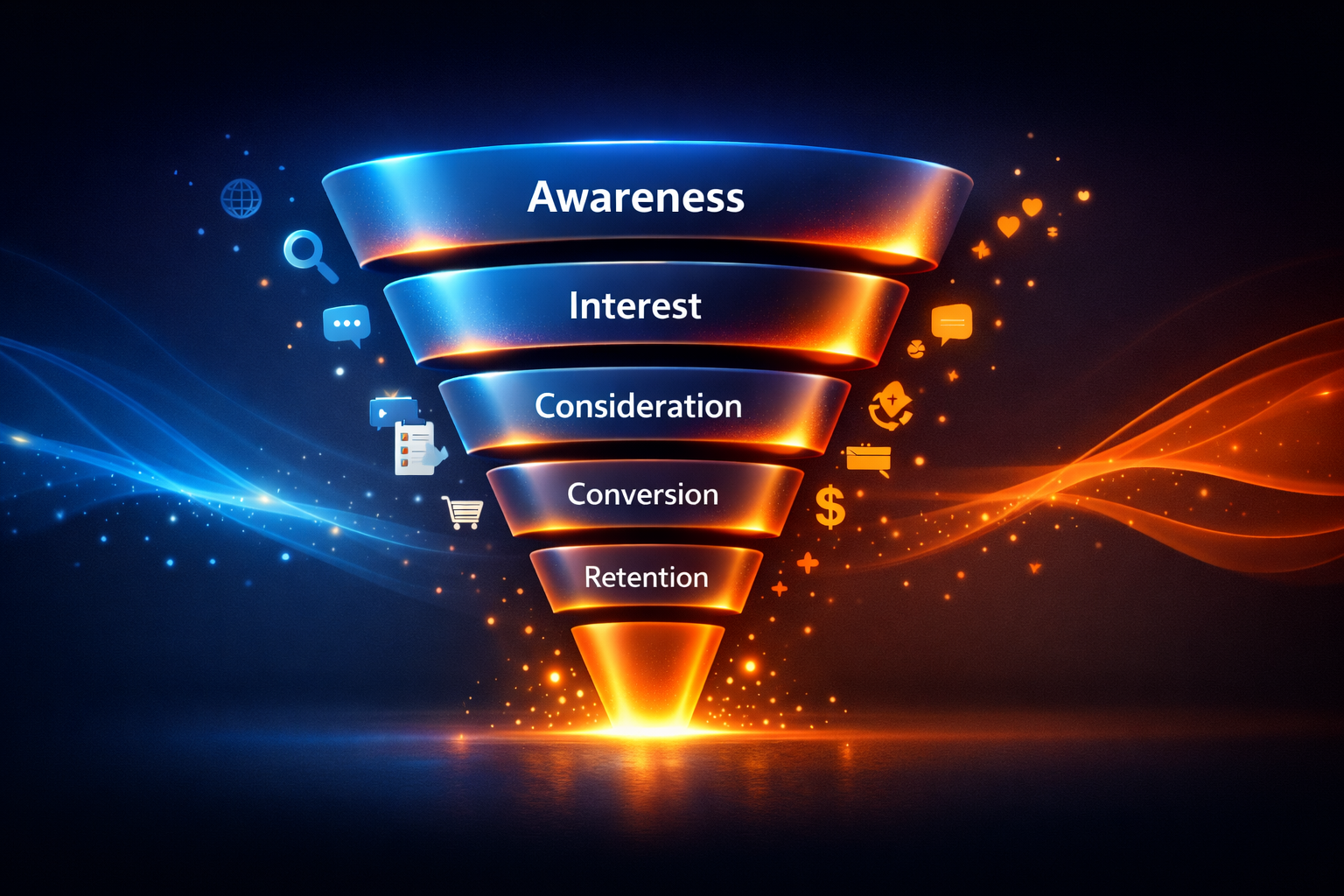
The five-stage marketing funnel — from broad awareness to loyal retention
A marketing funnel illustrates the journey that prospective buyers experience prior to completing a purchase. At the beginning of the funnel, individuals are merely becoming aware of your brand. As they progress deeper, they discover more about what you provide and ultimately determine whether to make a purchase.
The standard marketing funnel consists of five phases:
Every stage has a unique goal and necessitates various marketing tactics.
| Stage | Goal | Key Tactic | Primary Metric |
|---|---|---|---|
| Awareness | Brand exposure | Social media ads, SEO | Impressions, Reach |
| Interest | Generate engagement | Retargeting, Email newsletters | Newsletter sign-ups |
| Consideration | Educate & build trust | Free trials, Case studies | Demo requests, Trial sign-ups |
| Conversion | Drive purchase | Discounts, Clear CTAs | Conversion rate, CPA |
| Retention | Repeat business | Loyalty programs, Referrals | CLV, Repeat purchases |
The awareness phase is when individuals become introduced to your brand or product. At this stage, they might not realize they require your solution yet.
Based on my experience with marketing campaigns, this phase is essential as it influences the quality of traffic entering the funnel.
Companies often generate awareness through avenues such as:
In campaigns I've been involved with, social media advertisements were frequently utilized to familiarize new audiences with a brand. These advertisements were enhanced for reach and impressions instead of instant conversions.
Several key metrics at this point consist of:
The aim here is not sales — it's exposure.
After individuals recognize your brand, the subsequent stage is generating interest. This phase focuses on generating interest and motivating users to engage with your material.
In numerous campaigns I've studied, retargeting serves a significant function at this phase. Returning visitors to the website can be presented with extra content that enhances their interest in the product.
Companies frequently utilize:
For instance, when examining website activity via analytics dashboards, you can observe users navigating several pages prior to progressing further into the funnel.
To gauge interest, marketers monitor:
These signals suggest that prospective clients are beginning to show interest.
Potential clients are weighing various options during the consideration phase. They are aware of their issue and are evaluating several brands before deciding. Businesses need to educate and foster trust in this situation.
SaaS companies, for instance, frequently provide free trials so customers can try the product before committing. In a similar vein, case studies aid in illustrating actual outcomes.
Typically, marketers keep an eye on:
These behaviors show that a prospective client is giving your solution careful thought.
The actual purchase takes place during the conversion stage. Users are already familiar with your brand and have assessed what you have to offer. The current objective is to eliminate obstacles and facilitate their purchases.
Companies frequently employ strategies like:
Revenue can be greatly impacted by even minor enhancements to the conversion process.
The most crucial metrics at this point are:
These metrics aid in assessing how well your marketing funnel converts leads into paying customers.
After a sale, many businesses stop considering their clients. That is incorrect. Because repeat customers frequently bring in more money than new ones, retention is one of the most valuable stages of the funnel.
Businesses prioritize long-term involvement by:
Additionally, satisfied consumers are more likely to tell others about your product, which fosters organic growth.
Typically, retention success is determined by:
The customer journey across all five funnel stages
The biggest error that many companies make is concentrating solely on the conversion phase. They run advertisements with the expectation of making sales right away, but they overlook the fact that most clients require time to complete the funnel.
A good marketing plan takes into account every step of the process, from awareness to retention. Instead of depending on transient campaigns, companies can create a sustainable growth engine when every stage of the funnel collaborates.
A full-funnel approach creates a self-reinforcing growth engine
You can also find more information on my website if you're interested in learning more about digital growth systems, analytics, and marketing strategy: https://www.zeeshanabbas.in